Inversion
Avoid Stupidity

Core Idea
We default to chasing outcomes. But clarity often comes from examining the opposite. Inversion reveals blind spots, surfaces lazy assumptions, and kills optimism bias. Used well, it protects you from embarrassment, wasted effort, and self-sabotage.
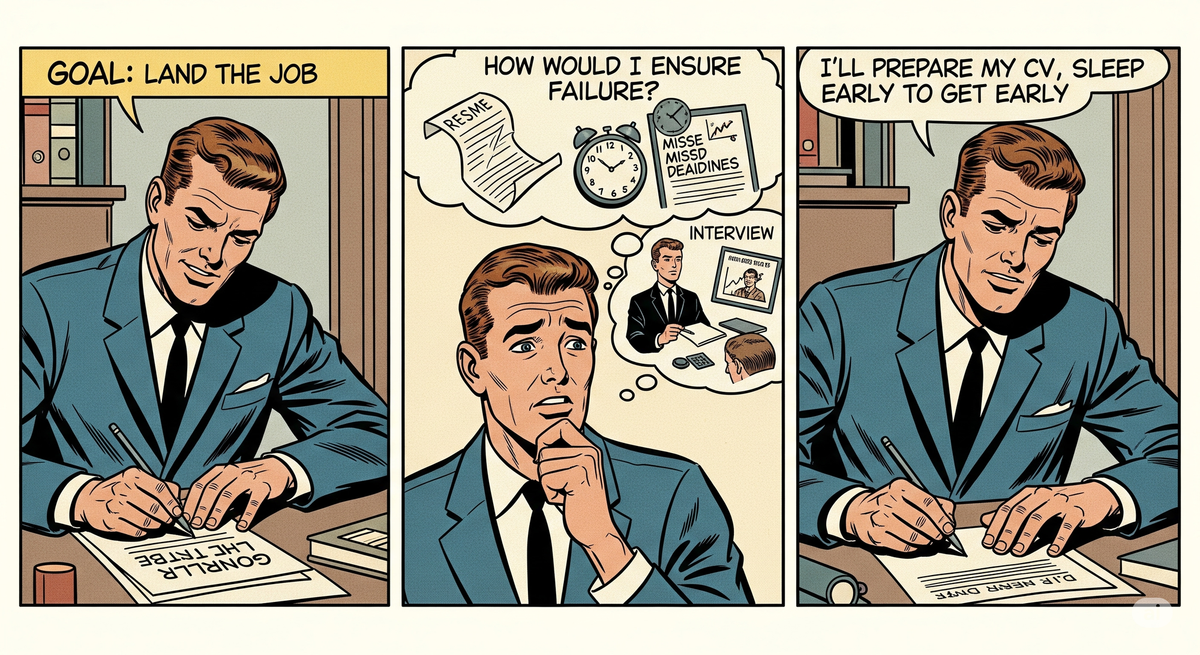
Inversion flips your thinking. Instead of asking “How can I succeed?” you ask “What would guarantee failure?” This model stress-tests your plans by imagining their collapse so you can prevent it.
Charlie Munger put it simply: “All I want to know is where I'm going to die, so I'll never go there.”
Practice
- Write down your current goal.
- Ask: “How would I ensure failure?”
Example 1 - Job Interview
1. Goal: Land the job
2. Failure: Show up late, vague answers, rambling, not prepping, not sleeping night before, eating too much, not eating at all, not dressing properly, not preparing my clothes,
Example 2 - Startup Launch
1.Goal: Launch successfully
2. Failure: No users, critical bugs, wrong audience,
Practice for 30 Days
Other Considerations
Don’t turn inversion into obsession. The goal isn’t to wallow in fear, but to gain control. Use worst-case thinking as a flashlight, not a prison.
Referenced Links
- Inversion Explained – Farnam Street
- James Clear on Inversion
- Naval: Inversion in Decision-Making (YouTube)
- Animated Mental Models by Inverted Passion (YouTube Channel)
- Instagram Reel — Inversion in Action (short clip)
Subscribe to get one new model each month.
Share this model: WhatsApp | Telegram | Email
Join the conversation: Discord Community